
White Shark Projects
Tracking white sharks in South Africa and detecting them in the western North Atlantic.
South Africa: Tracking white sharks along the Western Cape
Where do white sharks go when they leave places where they once gathered? Along South Africa’s Western Cape, researchers have documented killer whales preying on white sharks and sharks leaving some former gathering sites. Tracking individual sharks helps researchers learn where those animals go and what habitats they use.
November 2022 fieldwork
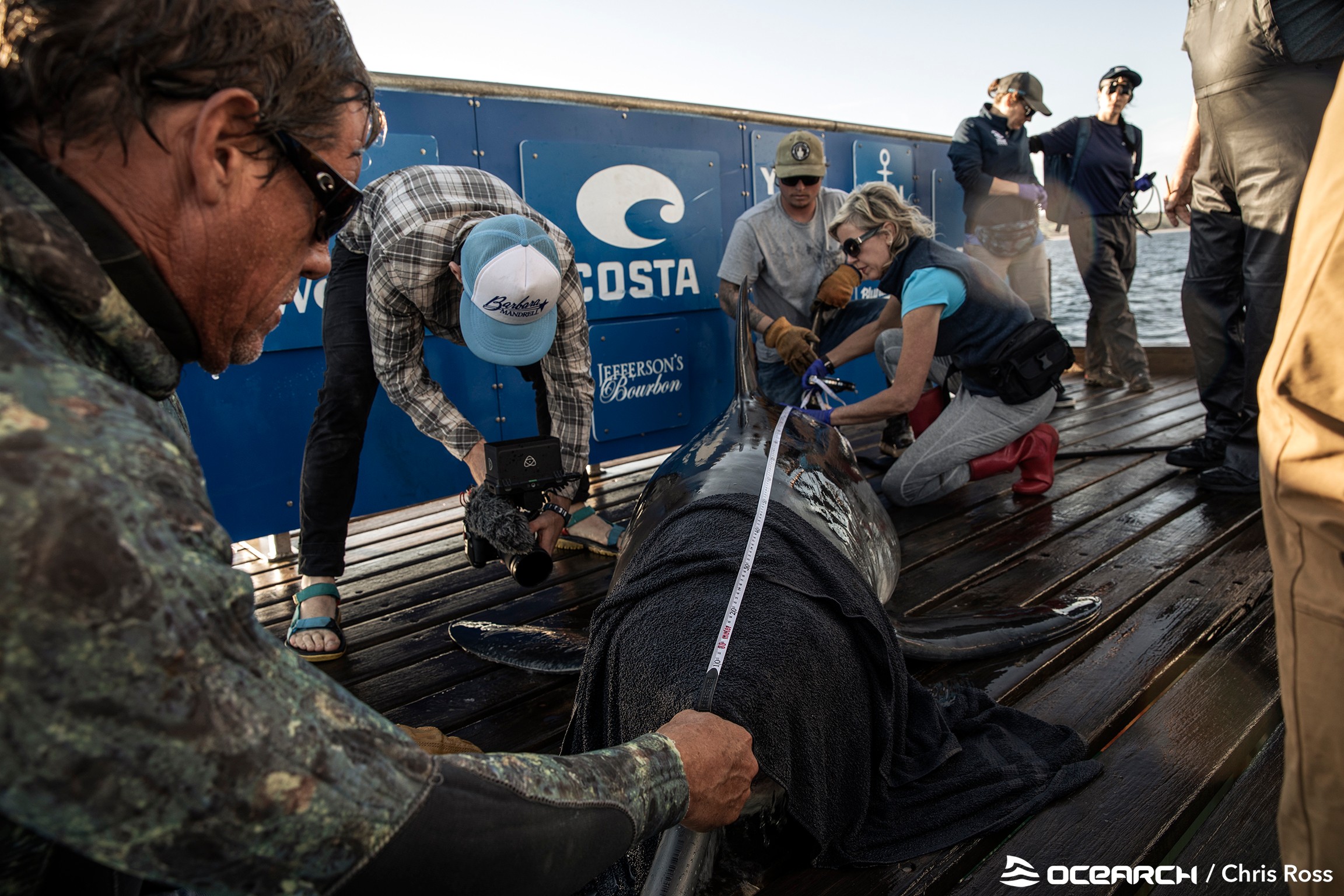
OFI’s Dr. Mikki McComb-Kobza and Dr. Chris Malinowski worked with Dr. Alison Kock of South African National Parks and Alison Towner, then at Rhodes University. With support from the Ocean Conservation Exploration & Education Foundation (OCEEF), the team fitted one white shark off Struisbaai with a satellite transmitter designed to record its movements and diving behavior.
Near Cape Town, the team deployed baited remote underwater video cameras around Robben Island. The footage provides a record of local marine life that researchers can compare with future surveys.
Photos from the November 2022 South Africa expedition


April 2025 follow-up in Mossel Bay
In a separate expedition that OFI helped support, a team led by Alison Towner and Alison Kock fitted eight white sharks with pop-up satellite tags over two days. In its November 2025 update, South African National Parks reported that three tags had surfaced near South Africa and two had surfaced far offshore, one in the Indian Ocean and one in the Atlantic. The locations show why tracking sharks beyond the tagging site matters for conservation.
Read the early tracking results from South African National Parks.
Western North Atlantic: Detecting white sharks with cameras and DNA
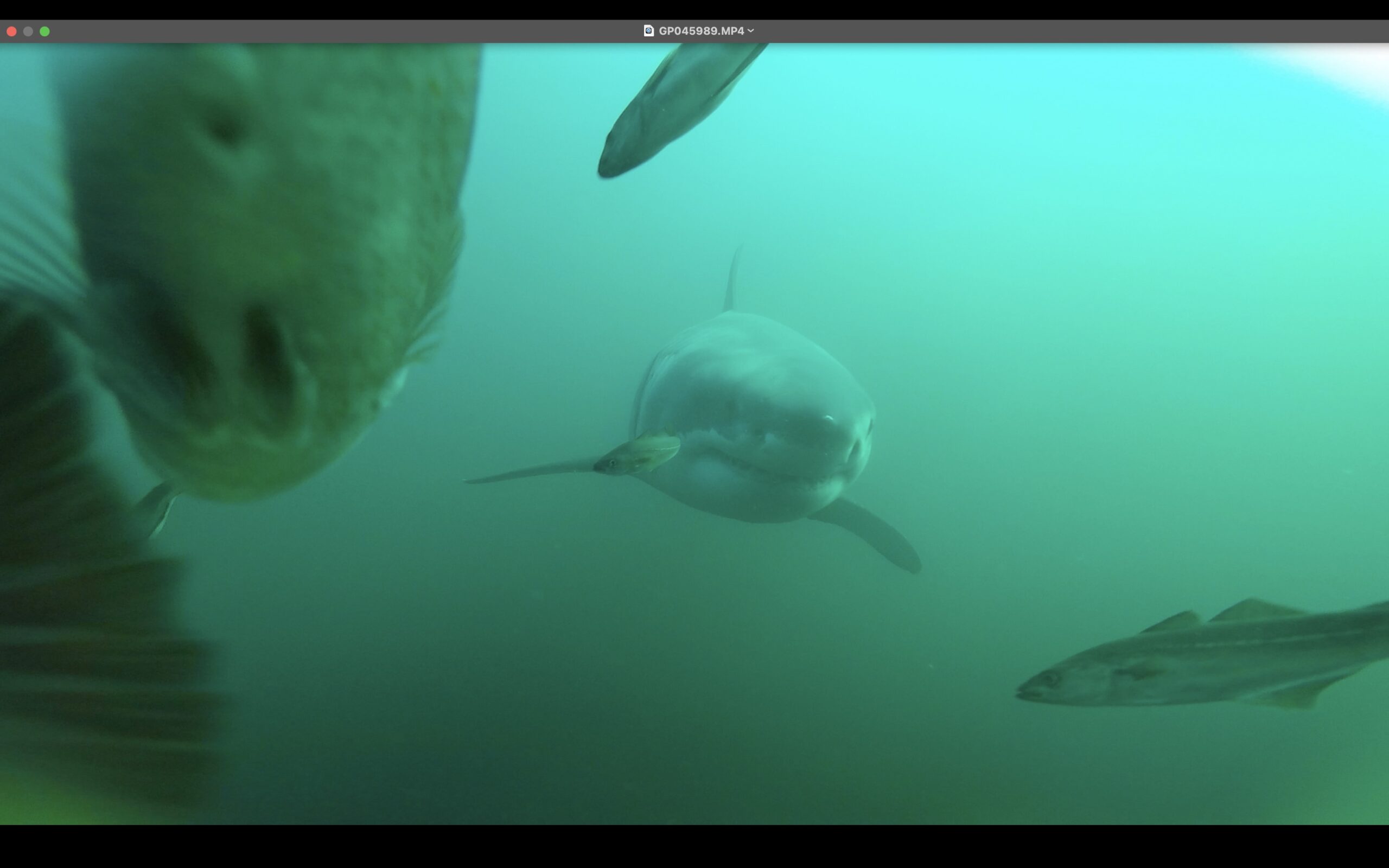
From 2019 to 2022, OFI and collaborators surveyed waters from Nova Scotia to South Carolina to see how well baited cameras and environmental DNA could detect white sharks (Carcharodon carcharias). The team deployed 267 baited remote underwater video systems (BRUVs) and collected 126 water samples at camera sites.
- Baited cameras record animals that approach the rig. Footage can confirm species and, when markings are visible, help distinguish individual sharks.
- Environmental DNA (eDNA) comes from material sharks shed into the water. Researchers filter water samples and test the filters for DNA specific to white sharks.
The researchers confirmed white sharks on video and reported positive DNA detections in water samples. The two methods give researchers different evidence of presence and can be used together to survey a wide area without handling sharks.
Photos from the 2021 Nova Scotia expedition
Read the 2024 Joint Meeting of Ichthyologists and Herpetologists abstract (35.3).